Numbness of the Little and Ring Fingers While Riding: What Your Body Is Telling You
If you’ve ever been on the throttle and suddenly felt your little and ring fingers go numb, you’re not alone. That tingling, dull loss of touch isn’t just vibration or bad gloves — it’s your body warning you that something deeper is going on.
Many off-road and long-distance riders experience this at some point. The cause often lies beneath the chest, in a small but powerful muscle that affects the entire arm.
The Anatomy Behind It
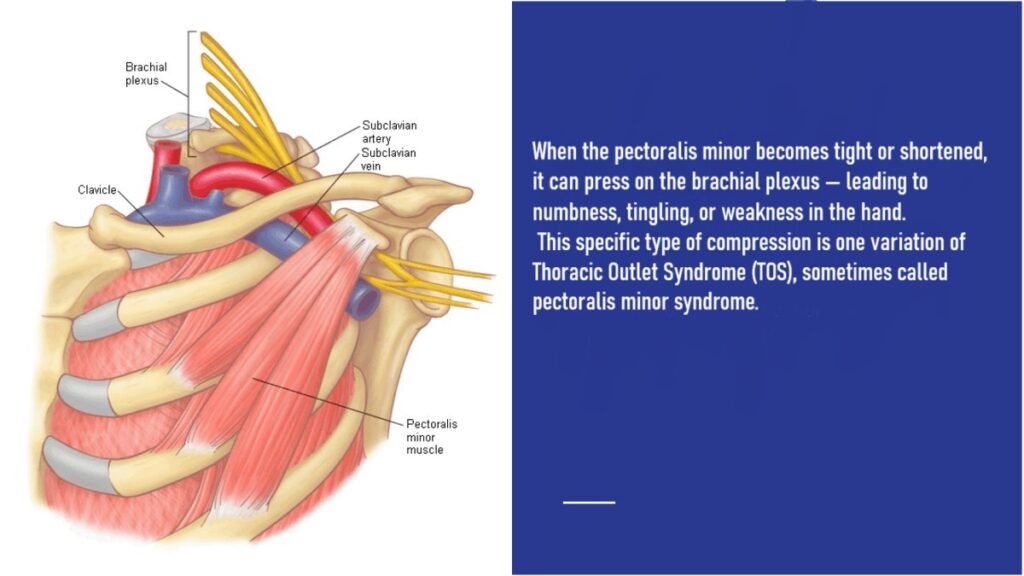
Beneath the larger pectoralis major lies a smaller but crucial muscle — the pectoralis minor. It connects your ribs (3rd–5th) to a small hook-shaped bone on your shoulder blade called the coracoid process.
Right beneath this muscle runs the brachial plexus, the bundle of nerves that powers your entire arm. Among them is the ulnar nerve, which controls sensation in the little and ring fingers.
When the pectoralis minor becomes tight or shortened, it can press on the brachial plexus — leading to numbness, tingling, or weakness in the hand. This specific type of compression is one variation of Thoracic Outlet Syndrome (TOS), sometimes called pectoralis minor syndrome.
Why Riders Are Prone to It
Poor Riding Posture
Off-road and enduro riders often lean forward, rounding the shoulders. That forward posture shortens the pectoralis minor while weakening the stabilizing muscles of the upper back — the rhomboids, trapezius, and serratus anterior.
Over time, this imbalance compresses the space where nerves travel, increasing pressure on the brachial plexus.
Throttle-Hand Mechanics
Using a cross grip (instead of a screwdriver-style grip) on the throttle tends to drop the right shoulder and rotate the scapula forward. This small movement keeps the pectoralis minor constantly tense — and over long rides, the tension builds into nerve compression.
Training Imbalance
In the gym, riders often strengthen large chest muscles but skip stretching or back training. The result? Tight chest, weak back, compressed nerves.
Other Possible Causes
If your thumb and index finger go numb instead, it’s often not the pectoralis minor — but the scalene muscles in your neck. These small muscles can tighten due to helmet weight, micro-movements, or vibration, compressing the brachial plexus higher up — another version of Thoracic Outlet Syndrome.
How to Fix It
Stretch the Pectoralis Minor
Find a wall or doorway. Place your arm slightly above shoulder height (100–110° angle) and gently turn your torso away until you feel the stretch across the front of your chest. Keep your shoulders down and relaxed.
Myofascial Release
Use a massage ball or roller just below the collarbone near the shoulder joint. Apply gentle pressure for 30–60 seconds to release muscle tension.
Strengthen Scapular Stabilizers
Work on the rhomboids, middle and lower trapezius, and serratus anterior. These muscles pull your shoulder blades back and down, restoring healthy shoulder alignment and reducing nerve pressure.
Adjust Riding Technique
Avoid letting your throttle-side shoulder drop forward. Occasionally loosen your grip, roll your shoulders back, and open your chest. Small resets during rides prevent static tension and improve blood flow.
When to Seek Help
If your numbness persists, worsens, or spreads, consult a neurologist or physiotherapist who understands upper-limb nerve compression syndromes. Persistent compression can lead to weakness or long-term nerve damage if ignored.
Takeaway
Your body is part of the machine — keep it tuned, balanced, and aware. To prevent numbness in your ring and little fingers while riding, focus on these key principles:
Use a screwdriver-style grip. Hold the throttle as if turning a screwdriver. This keeps your wrist neutral and reduces tension along the ulnar nerve.
Think about spreading your elbows outward, not lifting them up. Your elbows will naturally rise a bit, but the key is the direction of movement: spreading activates the stabilizing muscles of the upper back (rhomboids and lower trapezius), while lifting overuses the upper traps and closes the chest.
Stretch your pectoralis minor regularly. Perform a doorway or wall stretch, holding 30–60 seconds per side. Regular stretching opens the anterior shoulder and reduces nerve compression.
Do short resets during rides. Loosen your grip, open your chest, and roll your shoulders back every 10–15 minutes to improve circulation and prevent numbness.
Seek help if symptoms persist. If numbness continues or worsens, consult a specialist familiar with upper-limb nerve compression syndromes.